The Boundless Mind
The era of the run club
Date:
July 11, 2026
Inside the run club boom, and what it’s already rewriting about brands, nightlife, and belonging

Why Did the Most Solo Sport Become the Most Social One?
Running has always been the sport you could do completely alone, no team, no court, no opponent, just you and a pair of shoes. So there’s something genuinely strange about the fact that right now, in cities everywhere, it’s become one of the most reliably social things a person can do on a Tuesday night. Global run club membership jumped fifty nine percent in a single year, and new clubs have tripled. Entries for next year’s London Marathon hit 1.3 million people chasing roughly one hundred thousand spots, even after organisers expanded the race to two days just to fit more people in. That’s not a niche fitness trend ticking up. That’s one of the most solitary activities in existence getting rebuilt, in real time, as a group ritual.
Why running, specifically?
Plenty of activities could theoretically become a group hobby, but running has a structural advantage almost nothing else shares. It doesn’t need two evenly matched players, a court, a net, or a shared skill level to work. You can put a beginner and a marathoner on the same route at the same time, side by side or strung out across a mile, and the activity still functions exactly as intended for both of them. A pickup basketball game falls apart with mismatched skill. A run club doesn’t. That single structural fact is most of why running was always going to be the format that scaled into a mass social ritual first, long before anyone organised a single group chat to make it happen.
The traditional clubbing substitute
Here’s a more specific reason this is happening right now. Younger adults are drinking measurably less than the generations before them, and a typical night out in a major city, transport, entry, drinks, can easily run past a hundred dollars before midnight. Do that four weekends a month and it’s a real budget line, for a night that often ends in a hangover rather than anything that felt worth the cost. A run club costs nothing, starts at sunrise instead of midnight, and ends with the same dopamine hit nightlife was always chasing, minus the bill and the regret. For a generation actively reconsidering what a Friday night is supposed to feel like, that’s not a small trade. It’s a wholesale replacement of one social ritual with another. People running these clubs describe it in almost exactly those terms themselves. One Singapore run club put it plainly, a social run is the same as a night out with friends, dress up, show up, have a good time, just without the alcohol or the three a.m. ending.
The brand loop feeding itself
Something else is happening at exactly the same time, and the two are clearly feeding each other. Loewe, a storied Spanish luxury house with no real business in performance footwear, partnered with On as early as 2022 and has kept extending the collaboration since, which only makes sense once you see what’s actually happening underneath it. On’s quarterly sales are up over thirty percent year on year. Hoka has gone from roughly one hundred fifty million dollars in annual sales less than a decade ago to well over a billion now. On the resale market, where sneakers get bought and sold the way streetwear always has, running shoes that used to be considered a niche, slightly uncool category are posting some of the biggest gains on the entire platform, Saucony up nearly forty percent, Brooks up over fifteen hundred percent, in a single year.
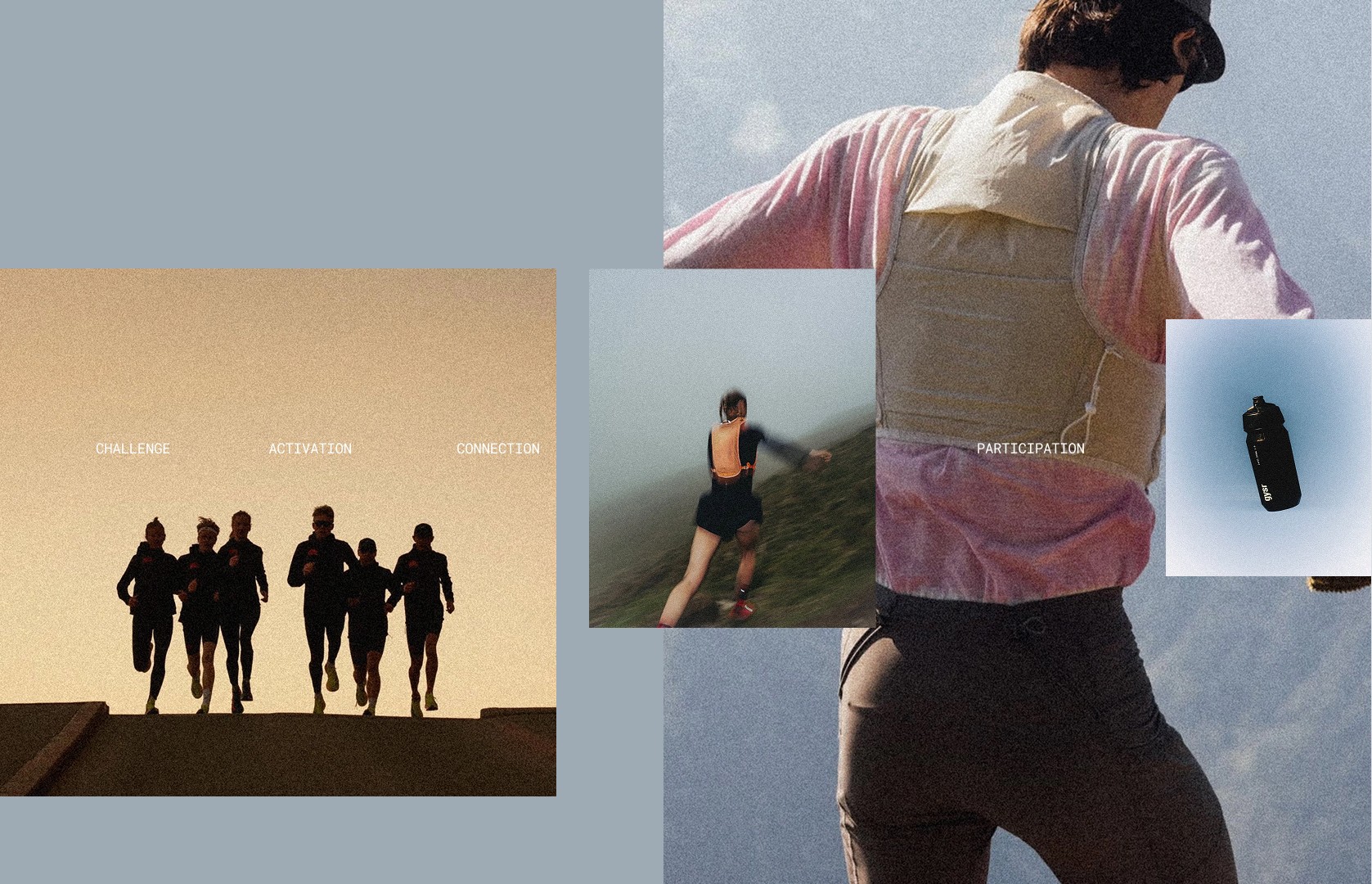
None of this happened by accident. As run clubs made the sport visibly social, stylish, and identity driven, the shoes worn to do it stopped being purely functional purchases and started being a style statement, which made the brands more desirable, which pulled more people toward the clubs wearing them, which made the shoes more desirable again. Bandit Running shows exactly how tightly that loop closes. It started as a small New York running community and built a genuine following well before it had much of a product line, and only then partnered with Asics on a co-branded shoe and apparel collection, because Asics needed access to a community it could never have built from inside a boardroom. The brand didn’t create the loop. It bought a seat inside one that already existed. It’s a loop, not a cause and effect. Beverage brands have already noticed too, treating the finish line the way bars used to treat last call, handing out a cold drink the second you cross it, because the brand wants to be remembered as part of the activation, not as an ad interrupting it.
What's worth saying plainly
There’s a sharper contradiction sitting underneath all of it too. Cool has always required some kind of barrier, a price, a skill, a door someone actually has to get past, and that’s exactly what running has never had. The same accessibility that let it scale into a mass ritual in the first place is the same thing that makes its current cool status genuinely fragile, since the moment everyone can do something, by definition nothing about doing it is exclusive anymore. Brands are trying to manufacture scarcity around it anyway, limited drops, paid memberships, invite only races, but they’re building velvet ropes around an activity whose entire appeal was never having one.
Not everything about this is scaling cleanly either. The same people building these communities for free, often as a side project, are now running something closer to a business, with all the safety, inclusion, and burnout questions that come with managing hundreds of strangers every week, and very little of the infrastructure that more formal sports built up over decades to handle exactly that. And there’s a quieter risk sitting underneath the wellness branding too, when showing up and looking the part becomes its own kind of performance, the same anxiety that nightlife was supposed to be an escape from has a way of finding its way back in through pace times and kudos instead.
So what this is actually signalling?
Step back and the real story isn’t really about running. It’s about what people are choosing instead of two things at once, instead of nightlife, and instead of just scrolling past someone else’s content. They want a ritual that’s physical, social, and self documenting all in the same hour, not three separate activities competing for attention. That’s the shift worth paying attention to far beyond running, shoes, social gatherings, wellness, and sport are all converging on the same format, something you do together, repeatedly, that produces its own proof on the way out.
For brands, the lesson is sharper than “sponsor a run club.” The last decade of marketing was built on getting into someone’s feed. The next one is being built on giving someone something to actually do, together, that they’d have shown up for even without a brand attached, and letting the brand earn its place inside that activation rather than interrupting it. Feed first marketing chased attention. Participation first marketing earns belonging, and belonging is a much harder thing to scroll past.