The Boundless Mind
What IKEA and Trader Joe's accidentally prove about how icons actually form
Date:
August 18, 2026
IKEA sells furniture. Trader Joe's sells groceries. Neither company set out to become famous for a bag. And yet ask most people to picture either brand, and a strong chance exists that a bag appears in their mind before a sofa or a bag of frozen mango does.

What IKEA and Trader Joe's accidentally prove about how icons actually form
IKEA sells furniture. Trader Joe's sells groceries. Neither company set out to become famous for a bag. And yet ask most people to picture either brand, and a strong chance exists that a bag appears in their mind before a sofa or a bag of frozen mango does. Two completely unrelated categories, home furnishings and supermarkets, somehow landed on the exact same accident. That's not a coincidence worth shrugging off. It's a pattern worth taking apart.
Neither bag was designed to mean anything
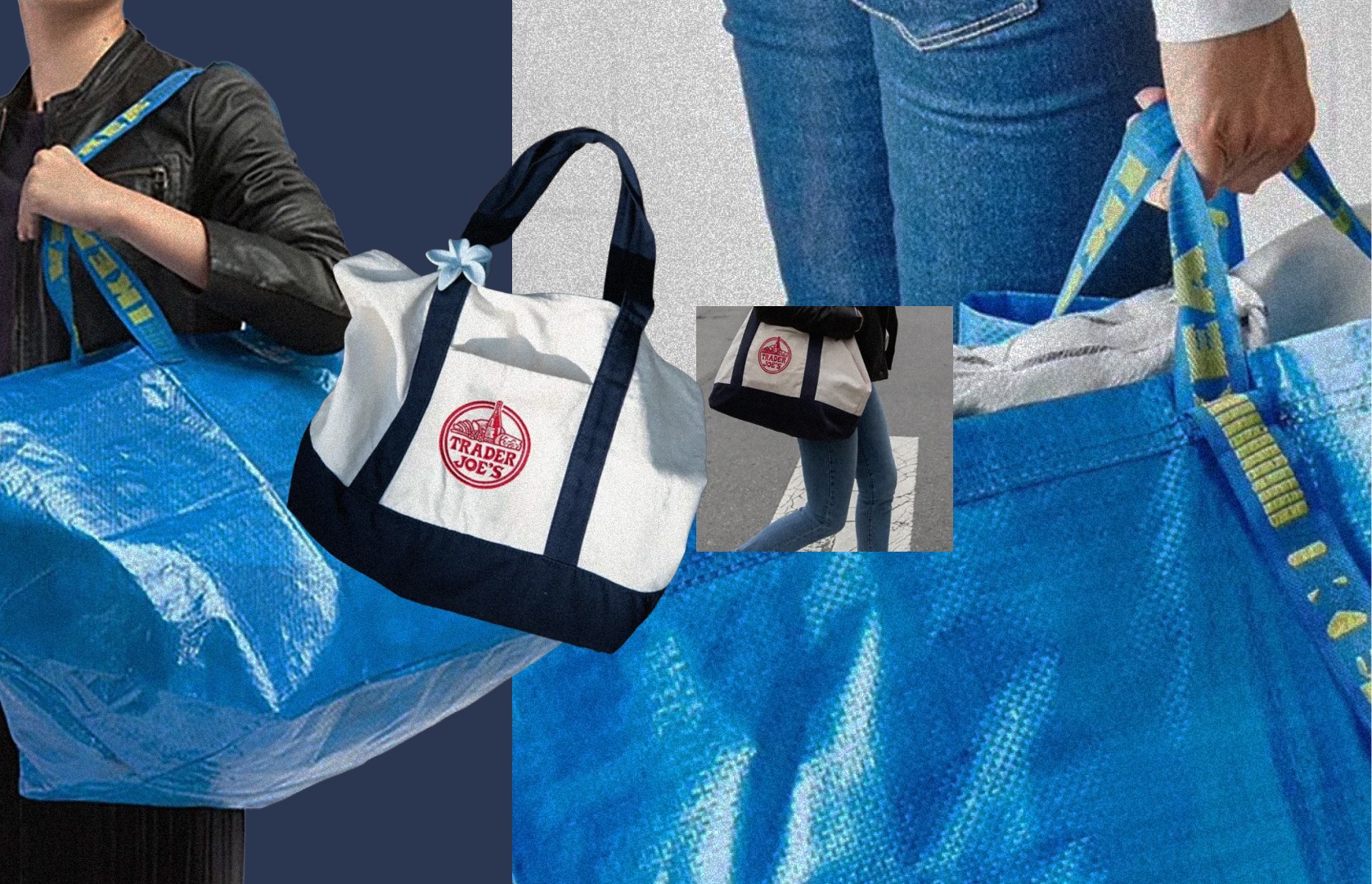
Start with what each object actually was before it became a symbol. IKEA's blue Frakta launched in 1987 as a cheap, durable carrier, sold for less than a euro, built to survive a move, a beach trip, or fifty kilograms of laundry without tearing. Trader Joe's canvas tote has existed since 1977 for an equally plain reason, helping customers carry groceries home while cutting down on plastic bag waste. Neither object was created with any symbolic ambition attached. Nobody at either company was trying to design something people would eventually fight over.
The moment each one got discovered, not built
Here's where the two stories start to rhyme. Neither brand manufactured the moment its bag crossed over into cultural relevance. Both moments arrived from outside, and both caught the company by surprise.
For IKEA, the turning point has a date. In 2017, Balenciaga's creative director released a leather tote that closely echoed the Frakta's shape and colour, priced at over two thousand dollars. The internet immediately noticed the resemblance, and the joke wrote itself, a fashion house charging luxury prices for something IKEA already sold for less than a dollar. IKEA didn't fight the comparison. It leaned into it, publishing a cheerfully specific guide on how to identify a genuine Frakta, including the detail that a real one rustles when you shake it. That single, witty response did more for the bag's cultural status than any campaign IKEA could have built from scratch.
Trader Joe's story ran differently but landed in the same place. In March 2024, the company quietly added a small canvas tote to its shelves. No announcement, no teaser, no campaign. Within days, TikTok was flooded with footage of shoppers grabbing armfuls of them, and the bags began reselling online for hundreds of dollars. A company spokesperson later admitted the totes sold faster than anyone anticipated, and that customers found them before the brand had a chance to promote them at all. Nobody planned that either.
What the bag is actually signalling
There's a detail worth sitting with from IKEA's own founder, who once said that seeing one of those bags in the street, people would know they had something in common. That line explains the real mechanism better than any market analysis could. Most of what makes an object desirable in this series so far has run on scarcity, something rare, restrained, or hard to access. This is the opposite engine entirely. The Frakta and the Trader Joe's tote aren't desirable because they're exclusive. They're desirable because almost everyone already has one, which means carrying it signals recognition rather than rarity, a quiet nod between strangers who share the same ordinary reference point. That's a genuinely different kind of status signal, built from ubiquity instead of scarcity, and it's rare enough that it's worth naming on its own terms.
What each brand did once it noticed
This is where the two stories actually diverge, and the difference matters for anyone trying to learn something from either case. IKEA mostly chose to preserve what had already happened rather than try to repeat it. Its response to Balenciaga was witty rather than commercial, and years later, when it opened a pop-up dedicated entirely to the Frakta on Oxford Street, the tone stayed nostalgic and celebratory rather than transactional. Even now, as IKEA phases out the original blue design in 2026, the reaction has been public mourning rather than manufactured hype, proof the brand mostly let the bag's meaning belong to the people carrying it.
Trader Joe's took a different path. Once the accident revealed genuine appetite, the company began deliberately engineering more of it, seasonal colourways, limited drops, an insulated version, each one released with the same lack of fanfare that made the first one work, but on a schedule this time rather than by chance. And it's working. Later drops have continued to pull the same queues and resale frenzy as the original, which suggests something worth noting honestly, the very first accident usually can't be manufactured from nothing, but once it happens and the appetite is confirmed, some of that same energy can be deliberately re-staged with real success.
What this actually teaches
The lesson here isn't that brands should try to accidentally go viral, that's not a strategy anyone can execute on purpose. The lesson is narrower and more useful than that. When something unplanned starts pulling this kind of attention, the brand's job in the moment isn't to control the story or rush to capitalise on it. It's to notice quickly, respond with the same tone that made the object appealing in the first place, and resist the urge to over-explain or over-produce it before understanding why it worked. IKEA and Trader Joe's both had that instinct right when it counted, even though what they did with it afterward looked completely different.
And underneath both stories sits a genuinely useful reminder for anyone thinking about status and desirability in their own category. Every brand already hands people its own version of this, a shipping box, a takeout bag, a receipt, a uniform, something so ordinary that nobody inside the company has looked at it twice in years. The lesson from both bags is to relook at these everyday, overlooked objects, because the thing your team stopped noticing internally might already be doing quiet work out in the world, and the only mistake left to make is not noticing it before someone else does.