The Boundless Mind
The flowers were fake. The frenzy wasn't.
Date:
July 18, 2026
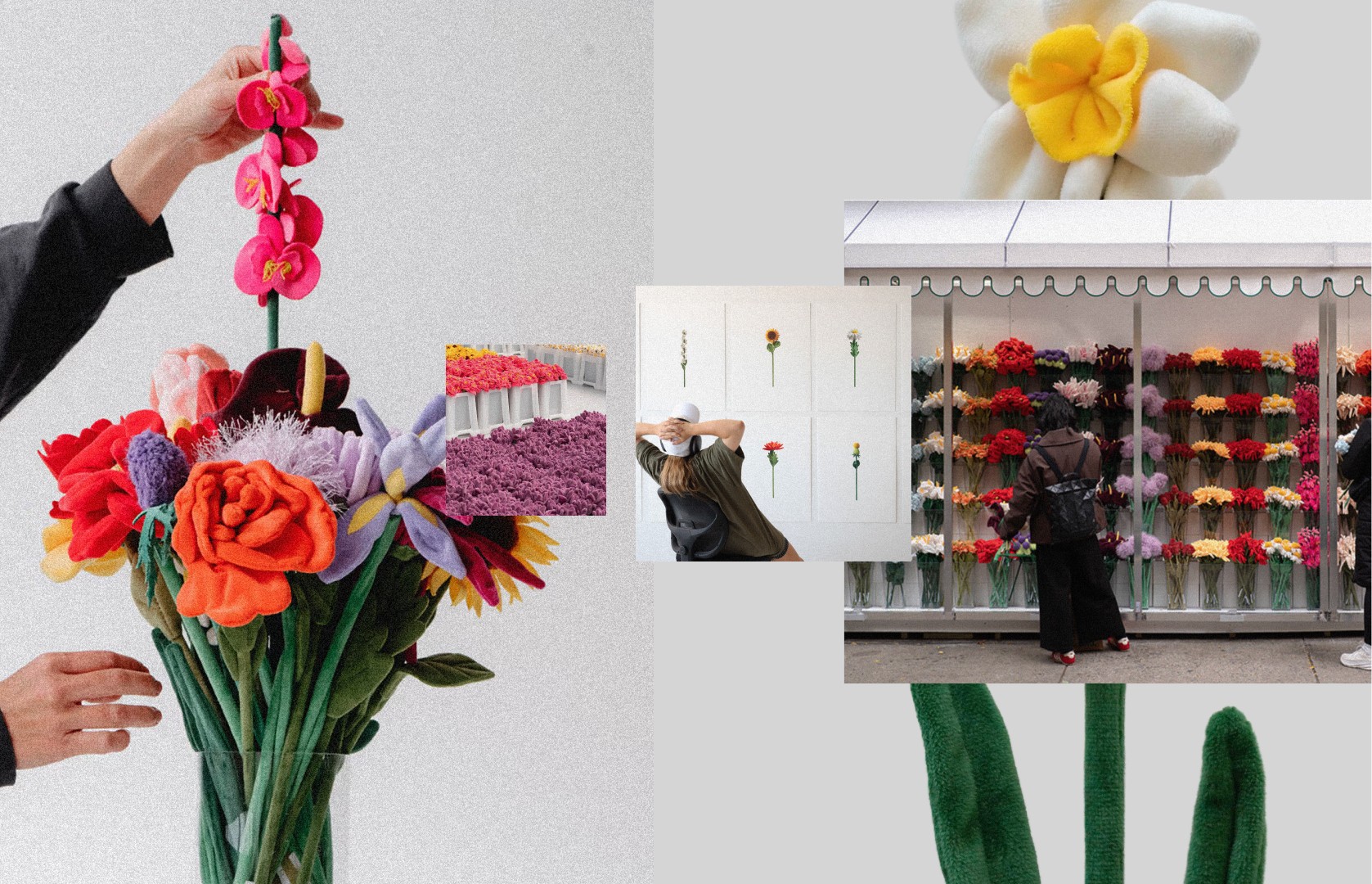
People stood in line for a flower with no scent, no stem, and no expiry date. Once inside, some of them ran. Video of grown adults sprinting across a Singapore exhibition hall to grab armfuls of plush flowers went viral within a day, and the online reaction split cleanly in two.

What CJ Hendry's flower market actually teaches about manufacturing desire
People stood in line for a flower with no scent, no stem, and no expiry date. Once inside, some of them ran. Video of grown adults sprinting across a Singapore exhibition hall to grab armfuls of plush flowers went viral within a day, and the online reaction split cleanly in two, some people called it embarrassing, others called it exactly what a limited item deserves. Nobody, on either side of that argument, disputed the strangest part. The flowers were fake. Felt and stuffing, mass produced, worth nothing on their own. And people still fought for them.
And yet it is one of the most strategically sophisticated brand activations in recent memory. Not because of its scale, but because of how little it needed to say.
The origin story worth knowing
The first version of this installation didn't launch as a triumph. It launched as a near disaster. When artist CJ Hendry staged the original Flower Market on Roosevelt Island in New York, the crowd got so large the event was shut down for overcrowding. Most brands would treat that as a failure to bury. Hendry treated it as proof of concept, and the show that followed, moved and expanded, became the template that has since travelled to Hong Kong, Rockefeller Center, Sydney, and now Singapore, where more than sixty thousand people passed through in a single run. The chaos wasn't a flaw in the system. It was the first sign the system worked.
Three things she's actually doing
Strip away the felt petals and there are three deliberate mechanics doing the real work, and none of them depend on the flowers being good.
The first is staged scarcity with a real clock attached. Every day, a handful of Singapore exclusive designs were given out on a first come basis, gone by around eleven in the morning. That's not a marketing flourish, it's a functioning deadline, the same mechanism that made a pop up bar's four week run and a numbered IKEA tote both outperform anything sold without an expiry date. A flower with no scarcity attached is a toy. A flower that runs out by eleven becomes something worth arriving early for.
The second is refusing to manage the story. When the hoarding videos went online and the criticism started, Hendry didn't apologise, clarify, or correct the record. Her own words on it are direct: you can't control everyone's narrative. That's not indifference, it's a choice, because every argument about whether the frenzy was embarrassing or justified kept the installation in conversation for free, far longer and louder than a press release ever could have. Most brands panic the moment their activation generates a negative headline. She let hers generate a debate instead, and the debate did the marketing.
The third is turning free access into proximity to something genuinely exclusive. Hendry's actual artwork, the hyperreal drawings that made her name, sells for sums that disappear into private collections most people will never see inside. The flowers cost nothing to take home, one complimentary piece per visitor, which means anyone who shows up gets to leave holding something physically connected to a practice that is otherwise completely out of reach. That's the real trade being offered. Not a flower. A small, free piece of proximity to an artist whose actual work most people could never afford to own.
What's genuinely new here, and what isn't
It's worth being honest that none of these three mechanics are new inventions. A closing date creating urgency, a brand declining to over-explain itself, a free item working as a gateway into something bigger, all three have shown up elsewhere in exactly this kind of activation before. What makes this case worth studying isn't a new formula. It's watching all three mechanics executed at once, with total consistency, on an object that offers absolutely nothing else to justify the demand. No craft story. No material value. No functional benefit. A well tailored coat still has real craftsmanship underneath its restraint. A rare bottle of wine still has an actual taste to justify its price. This has none of that. It is the cleanest version yet of proving that scarcity, staging, and restraint alone are enough to manufacture real desire, with nothing underneath holding it up but the execution itself.
That's the actual skill on display, and it's a different skill from invention. Hendry didn't discover a new lever. She pulled three known levers at the same time, with total commitment, and refused to second guess any of them once the crowd showed up.
So what does this teach about buying into hype?
There's a temptation to read this story as proof that people will fall for anything if you dress it up well enough, and that reading isn't wrong, but it's incomplete. People weren't fooled into wanting a plush flower. They were given a genuinely well built reason to want one, a real deadline, a real story, a real, if small, connection to something bigger than the object itself. Hype that works isn't hype built from nothing. It's a small, honest structure, scarcity, restraint, access, built well enough that people supply the rest of the meaning themselves.
For brands, the lesson isn't to chase the next viral spectacle. It's to notice that the tools here are already sitting in most marketing playbooks, unused or half used, because most brands don't commit to any of the three fully. They create scarcity but then over explain it. They build access but then flood it with product until the exclusivity dies. They get criticised and immediately apologise, killing the exact conversation that was carrying their reach. Hendry's flower market isn't a new idea. It's an old idea, executed without a single moment of hesitation, and that hesitation is usually the only thing standing between most brands and a moment like this one.