The Boundless Mind
The steady, premium rise of cycling
Date:
July 17, 2026
Cycling Was Always There. You Just Didn't Notice It Getting Expensive.

Cycling Was Always There. You Just Didn't Notice It Getting Expensive.
The bicycle has been with us longer than the car. It began as liberation, the first machine that let ordinary people move themselves faster than their legs could carry them, and for most of its history it was exactly what it looked like: a practical, democratic, slightly unglamorous way to get from one place to another. Somewhere between then and now, a decent road bike started costing as much as a used car, luxury watchmakers began sponsoring Tour de France teams, and early morning cyclists in premium kit replaced golfers as the new signal of status in cities like London, Singapore, and San Francisco. The shift didn’t happen loudly. It happened the way most durable cultural changes happen, gradually, then all at once, driven by a small number of people who understood that what they were really selling had nothing to do with transportation.
What Cycling Originally Was
The bicycle’s democratic roots are worth understanding before tracing how far they’ve been left behind. For most of the twentieth century, cycling occupied two roles simultaneously. In everyday life it was transportation for the working world, available to nearly anyone, requiring no licence, no fuel, and no significant upkeep. In sport, it was brutally egalitarian in a different way, almost impossibly hard, associated with suffering across mountain passes, measured in hours rather than minutes, and watched by people who respected it for the same reasons they respected hard manual labour. Neither version was aspirational in the way that word is used today. You rode because it was cheap or because you loved the sport. The idea of cycling as a luxury lifestyle signal would have been unintelligible to most of the people doing it.
How it became a hobby
The shift from utility to leisure began picking up pace in the 1990s and early 2000s as cycling infrastructure expanded in certain cities and endurance sport started gaining mainstream appeal, partly on the back of marathon culture. Mountain biking opened up a new off-road demographic. Triathlon created a crossover audience. And a generation of urban professionals who’d grown up neither needing a car nor being able to afford one easily discovered that cycling was a genuinely serious athletic pursuit hiding inside a practical activity they already understood. Clubs formed. Sportives grew. The weekend group ride became a fixture of a particular kind of urban professional life, but the gear was still largely functional and the visual language was, to put it charitably, not something anyone was proud of.
The one brand that changed everything
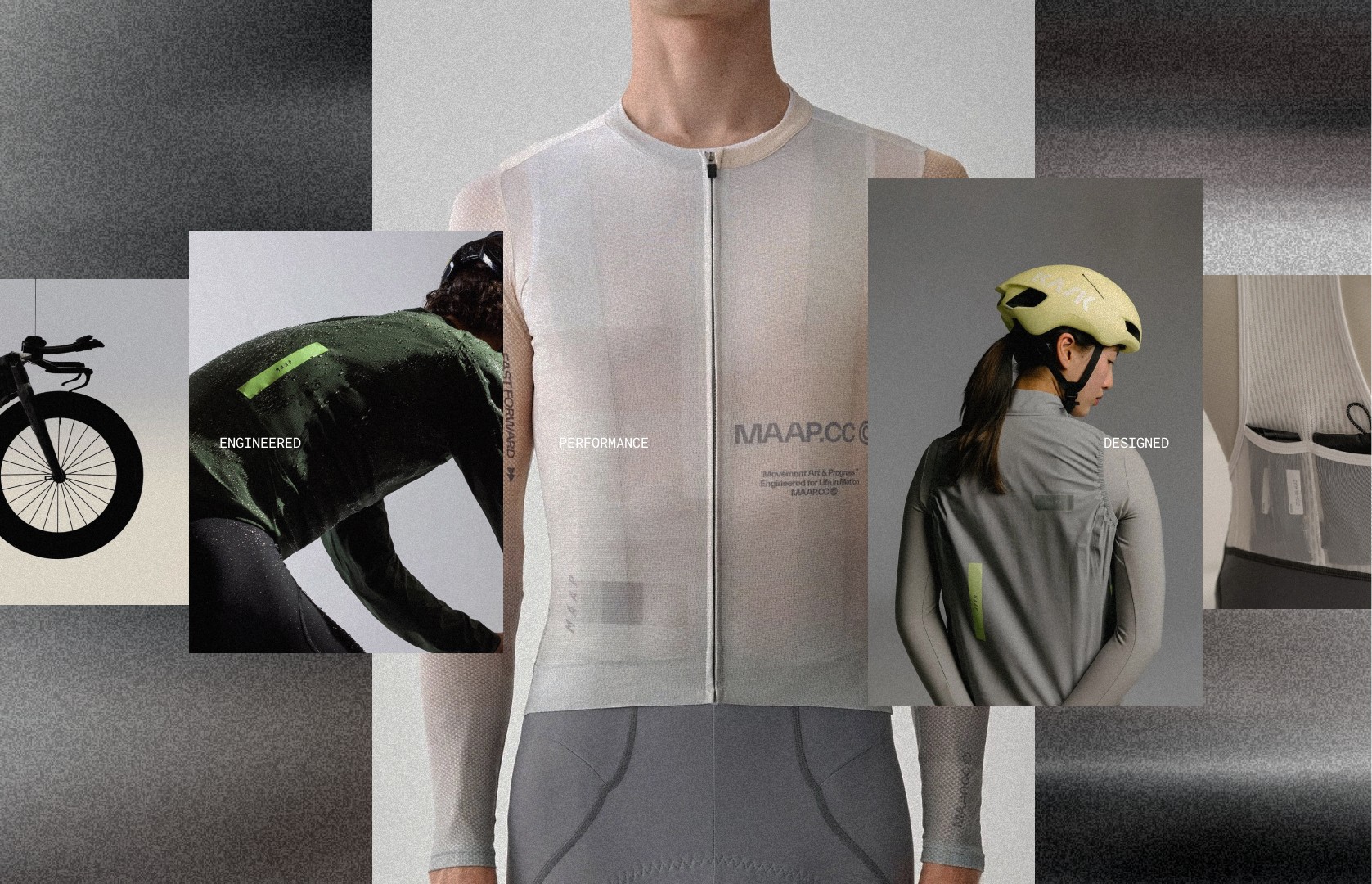
In 2004, a British marketing consultant named Simon Mottram launched a cycling apparel company with roughly a hundred and forty thousand pounds and a conviction that the sport was being let down by everything designed around it. The colours were loud, the cuts were unflattering, and nothing on the market tried to represent the actual beauty and history of cycling as a sport. Mottram’s solution was to do the opposite of what the market expected. He made the colours muted, the fits considered, the fabrics premium, and the storytelling romantic rather than technical. He called it Rapha, named after a 1960s racing team.
It took four or five years to turn a profit. What Rapha was doing was, as Mottram later put it, not taking a piece of someone else’s pie. It was creating another pie entirely, one called premium lifestyle apparel, that nobody in cycling had thought existed. A Rapha jersey wasn’t selling performance credentials. It was selling taste, identity, and membership in a particular kind of cultural community. The price point, well over a hundred dollars for a jersey, wasn’t incidental to the brand. It was structural to it. High pricing was the signal. The cult following that formed around it was organically built, and by 2015 the Rapha Cycling Club had grown from six hundred members to over ten thousand in three years, with clubhouses positioned as community spaces and café start points rather than retail stores. What Rapha did was less a product launch than a category invention, and every premium cycling brand that came after it, from Pas Normal Studios to Café du Cycliste, was working in a space Rapha had built from nothing.
Why cycling specifically lends itself to premium
The product itself does most of this work, and it’s worth being specific about why. A high-end road or gravel bike now starts around fifteen hundred dollars, with mid-range models running three to five thousand, and the differences at each price tier are technically legible even to a casual observer: weight, materials, groupsets, carbon versus aluminium, electronic shifting versus mechanical. That legibility matters enormously, because it means the expense is justifiable in the same way a Swiss watch is justifiable, through the language of craft, engineering, and performance rather than the optics of ostentation alone. The equipment carries a story. A premium bicycle is a compelling combination of centuries-old technology paired with twenty-first century materials, which is precisely the same narrative luxury watchmakers have been selling for decades, and exactly why Richard Mille, Breitling, and Tudor have all moved into cycling sponsorship with intent.
The other thing that helps cycling resist the drift toward pure performance wear is solitude. Running went social quickly and loudly because the format naturally scales from one to many without friction. Cycling has always carried an equally strong solo tradition, the long solo ride as a meditation, a test, a private reckoning with distance, that the group ride exists alongside rather than replacing. That dual nature has meant the category can sustain a contemplative, even philosophical brand language that pure group activities struggle with. The physical challenge of the activity has meaning. The distance has meaning. Brands that understand this can sell much more than a jersey.
What this says about the people doing it
The demographic picture here is not subtle. A 2025 McKinsey survey found that between fifty-one and fifty-four percent of active consumers, especially millennials and Gen Z, now see fitness as integral to their identity rather than as a hobby they happen to have. Cycling, which sits at the intersection of wellness, environmental consciousness, and technically complex equipment, maps almost perfectly onto the values this demographic publicly identifies with. Riding is both good for your body and demonstrably better for the city you live in, which means it can be worn twice, once on the road and once as a moral position. It is also, importantly, expensive enough that affording it well signals something about the resources available to you, time as much as money. Long training rides and recovery are not occupational hazards of the ordinary working week. They are a visible signal that someone has organised their life around their priorities rather than just fitting fitness in where they can.
None of this is peculiar to cycling. The same dynamic is running through the wellness category broadly, from cold plunge culture to high-end gym memberships to biohacking. What cycling adds is the technical depth and the equipment arms race that give the signal somewhere to escalate indefinitely, always another upgrade available, always another marginal gain to pursue.
What brands should take from this
The Rapha story is the most instructive in the series, and not entirely for the reasons a brand manager would hope. Rapha created an entirely new category from a standing start with a hundred and forty thousand pounds and a precise aesthetic and cultural conviction. The brand peaked around the mid 2010s, with twenty-two clubhouses worldwide and a growing membership. Then the Walton family acquired it in 2017 for roughly two hundred and fifty-four million dollars, expanded distribution, broadened the product line, softened the exclusivity, and the brand has not turned a profit since. Rapha posted a loss of nearly twenty-nine million dollars in the 2023 to 2024 financial year. The lesson isn’t that the brand failed. The lesson is that the conditions that built the brand- the tight positioning, the deliberate scarcity, the singular cultural focus- were incompatible with the growth mandate that followed acquisition.
That’s the sharpest thing cycling’s premiumisation teaches anyone building a brand. A new category can be created from almost nothing if the positioning is precise enough and held long enough for a genuine community to form around it. The premium signal works because it is specific, legible, and genuinely exclusive. The moment it’s diluted in pursuit of scale, the signal disappears, and so does the premium. Rapha’s story isn’t a cautionary tale about cycling. It’s a case study in what premium brands are actually built from, and exactly how quickly the thing that built them can be traded away.