The Boundless Mind
What Levi's and Gillette's World Cup workaround actually proves about brand equity
Date:
August 18, 2026

What Levi's and Gillette's World Cup workaround actually proves about brand equity
FIFA sells naming rights protection as one of the most valuable things a World Cup sponsor buys. Every venue that carries a non-sponsor's name gets stripped of it for the tournament, no exceptions, regardless of how long that name has been on the building. Levi's Stadium became the San Francisco Bay Area Stadium. Gillette Stadium became Boston Stadium. Every visible logo, every branded seat sticker, every condiment bottle without an official sponsorship deal, covered, taped over, or removed entirely. On paper, that's a marketer's nightmare, a brand with real, paid for physical presence at one of the biggest sporting events on earth, rendered invisible by contract. What actually happened tells a more interesting story than the restriction itself.
The setup
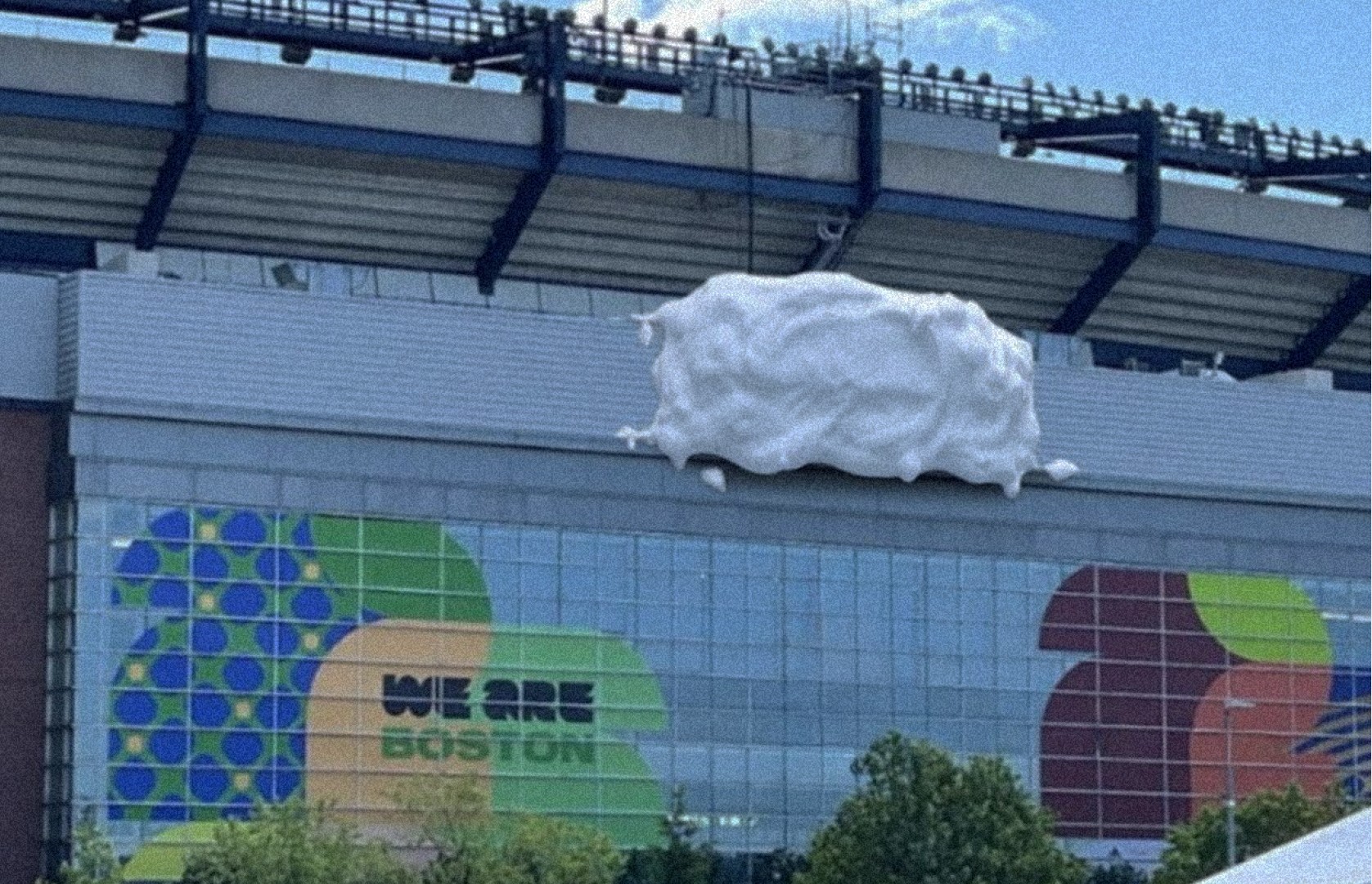
FIFA's brand protection isn't incidental, it's a significant part of what official sponsors are paying for, with World Cup sponsorship revenue running into the billions. That means the enforcement has to be thorough, not symbolic. Levi's 3D logo on the side of its own namesake stadium got wrapped in tarpaulin. Gillette's name, present on over sixty thousand individual seat stickers inside its own stadium, got taped over one by one. Heinz's condiment bottles inside the venues had their labels blacked out. None of these were minor brands caught off guard, they were major, well resourced marketing teams facing a restriction they had no legal path around.
Where this could have gone wrong
The obvious paths here are all bad ones. A brand could fight the restriction publicly and come across as petty, arguing with a global sporting body over a rule that applies equally to everyone. A brand could stay completely silent and simply absorb the loss of visibility, which is invisible in a different, quieter way, nobody notices a brand that disappears gracefully. Or a brand could try to force its way back into view with something loud and off tone, which usually reads as desperate rather than clever. Most brands, most of the time, default to one of these three, because reacting well to an unplanned constraint in real time is genuinely hard to do without a misstep.
What actually happened
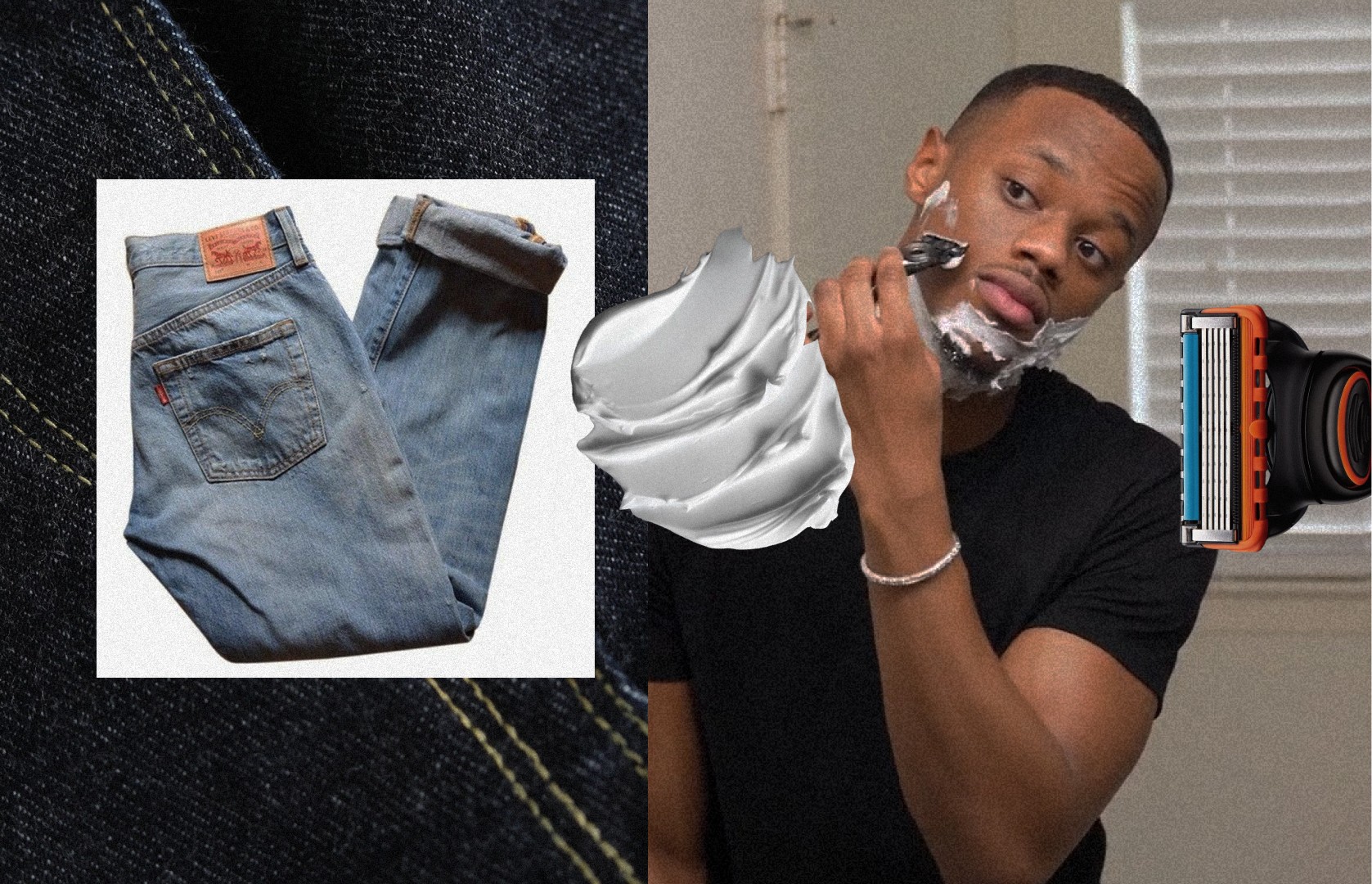
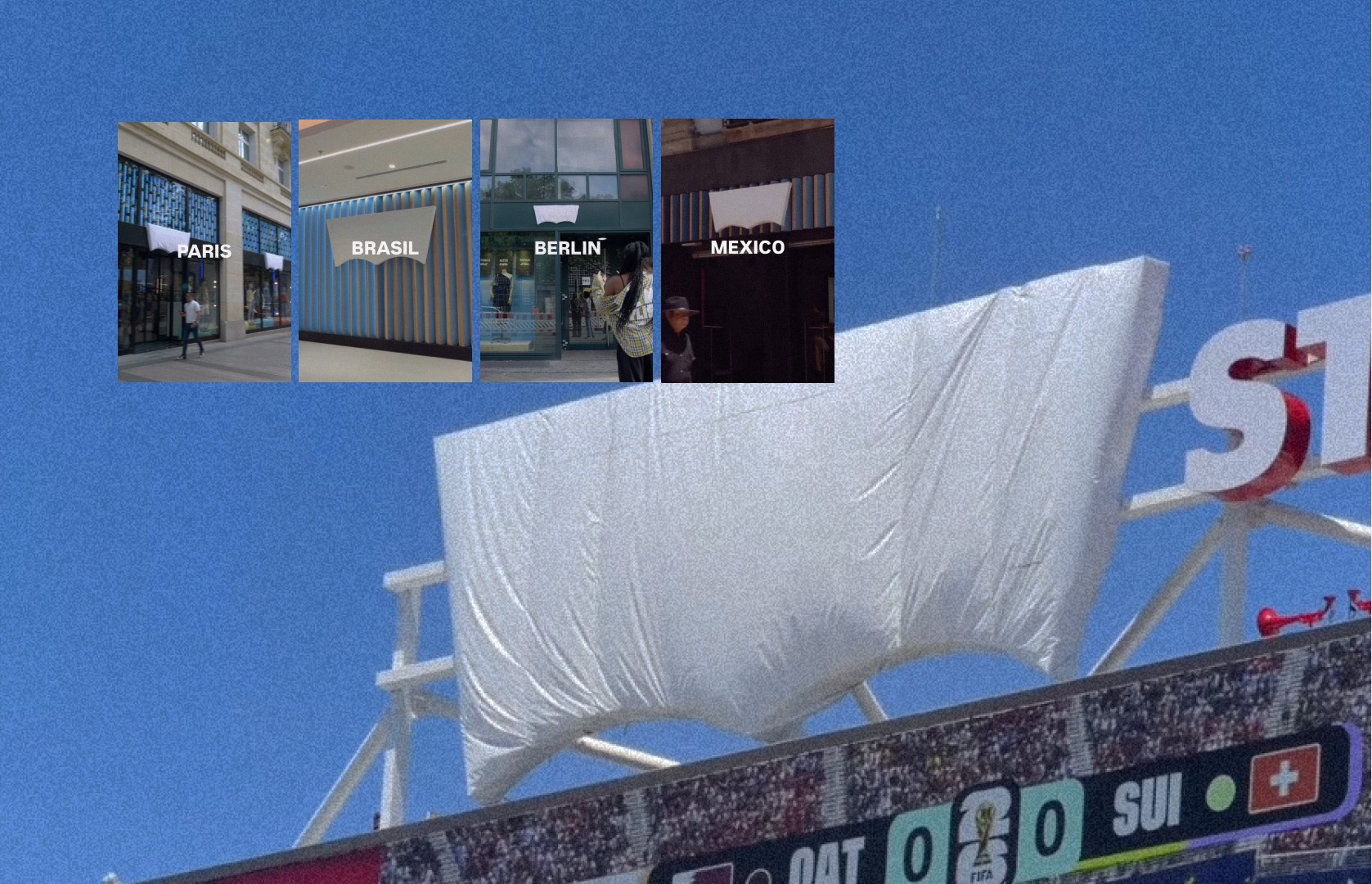
Levi's didn't fight the tarpaulin covering its logo. It let the wind do the work, the tight fabric still revealed the outline of the batwing shape underneath, and Levi's leaned directly into that, posting about it, changing its social media profile picture to the covered logo, and extending the joke by covering its own storefront signage in France, the UK, Mexico, and Brazil. The stunt pulled nine million views on TikTok alone. Gillette took a different but related approach. Rather than simply accepting the cover up, the brand posted an image of its own logo apparently buried under a mound of shaving foam, with the caption, at least we got to choose how we cover it. The image wasn't even real, the actual covering was plain fabric, but the joke worked because it connected the restriction directly back to the product itself, transforming a compliance requirement into a small piece of product demonstration.
Neither brand argued with FIFA. Neither brand went quiet. Both found the version of the joke that was entirely their own to make.
Why this actually worked
Here's the part worth sitting with longest. FIFA could legally cover a logo. It could not cover a shape the wind kept revealing, and it could not erase the instant, wordless association most people already carry between shaving foam and a specific brand. Marketers call these distinctive assets, the shapes, colours, and product cues that let a brand be recognised without needing to read its name at all. Levi's batwing stitch and Gillette's association with foam are both distinctive assets built up over decades of consistent use, long before this tournament existed. One industry commentator put the underlying principle plainly, logo visibility can be rented for an event, brand recognition has to be built long before the event begins.
That's the actual mechanism behind everything that looked spontaneous here. The wit in the response mattered, but the wit only had something to work with because both brands had already spent years building recognition that didn't depend on a visible name. A brand with no distinctive shape, no established visual shorthand, facing the exact same restriction, would have had nothing to lean on the moment its logo disappeared. The joke would have had nowhere to land.
What this actually teaches us about brand building
It's tempting to read this as proof that all publicity is good publicity, and that reading is too generous to the idea and not generous enough to what these brands actually did. This wasn't publicity found by accident. It was publicity built from years of patient, unglamorous brand asset investment, cashed in at exactly the right moment, with the self awareness to know precisely how much humour the moment could carry without tipping into trying too hard.
The lesson for anyone building a brand isn't reduced to being quick or being funny when a constraint appears. It's that being ready to respond well in that moment isn't a skill you can improvise from nothing. It's the payoff of having built something recognisable long before the constraint ever showed up, so that when your name gets taken away, there's still something left for people to recognise. Most brands spend their creative energy chasing the next campaign. The ones that win moments like this spent it earlier, building the thing that doesn't need the name attached to still be understood.