The Boundless Mind
Why Aesop replaced its products with books
Date:
July 18, 2026
Aesop replaced its products with books. A lesson in alignment and self awareness

Aesop replaced its products with books. A lesson in alignment and self awareness
For three days, they show, not tell
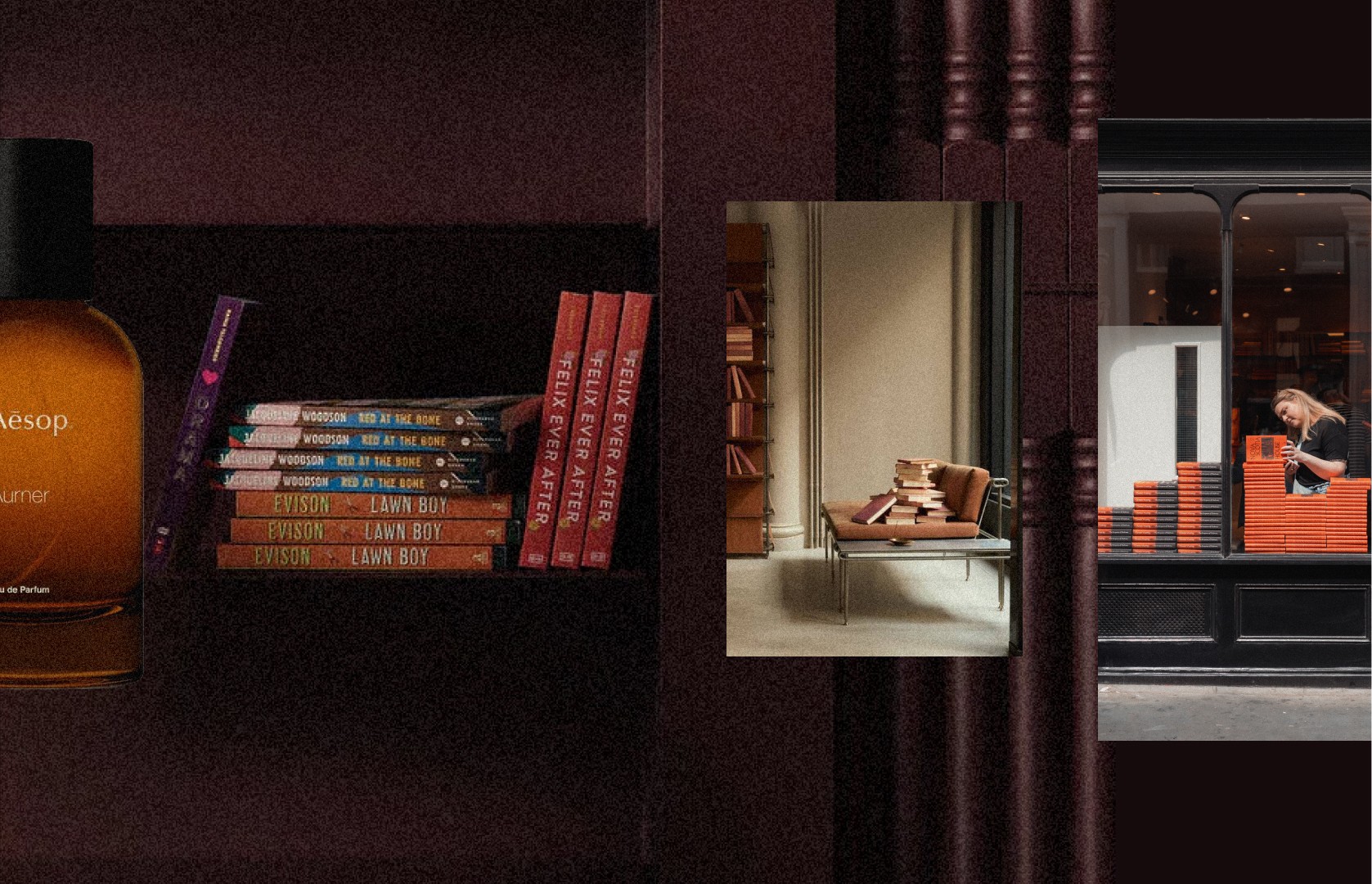
Every June, in select stores across the globe, Aesop removes its entire product line from the shelves. The amber bottles, the hand balms, the cleansers. All of it goes. In its place: queer literature. Curated titles by LGBTQIA+ authors, displayed with the same considered arrangement the brand applies to everything it touches. Visitors are invited to take a book home. No purchase required. No campaign fanfare. No rainbow logo.
The initiative is called the Queer Library. It started during COVID, when Pride celebrations were cancelled and a modest gesture felt like the right response. That was six years ago. Since then, the programme has distributed more than 115,000 books across the US, Canada, the UK, Germany, and Australia. This year’s edition in New York, titled “Body of Work,” ran for three days at the Nolita store. Three days. That’s it.
And yet it is one of the most strategically sophisticated brand activations in recent memory. Not because of its scale, but because of how little it needed to say.
The move underneath the move
Most brands treat activism as an addition. A campaign layered on top of existing operations. A statement posted alongside the usual content calendar. A limited edition product with a percentage going to a cause. The gesture sits next to the brand rather than coming from inside it.
Aesop did something structurally different. Rather than adding a Pride campaign on top of its regular programming, it temporarily became something else entirely. The stores stopped being retail spaces and started functioning as libraries. The commercial layer was removed, not decorated over. That distinction matters, because it meant the message was carried by the absence of selling rather than by the presence of marketing.
This is possible only when a brand understands, with genuine clarity, what people come to it for and how they experience the space. Aesop’s stores have always functioned as curated environments. People walk in expecting considered arrangement, sensorial richness, and a feeling of being inside a world that has been thought through. The Queer Library takes that exact expectation and redirects it. The shelves still look intentional. The arrangement still feels precise. The space still carries the same quiet authority. The only thing that changed is what’s on the shelves.
That’s the strategic move most commentary misses. This is not a brand doing something new. This is a brand using the thing it already does well, curation, spatial design, editorial judgment, and pointing that capability at something that matters. The machinery stays the same. The purpose shifts.
What the books actually do to the space
For design-focused readers, this is worth pausing on: the books do not dilute the Aesop aesthetic. They extend it.
The titles are displayed with the same intentional repetition and pattern-making that governs how the products normally sit on shelves. The spines create rhythm. The covers introduce colour within a tonal range that reads as considered rather than chaotic. The effect is closer to a well-curated independent bookstore than a retail promotion, carrying a literary warmth that layers onto spaces already designed to feel like considered, lived-in environments.
There is sensorial continuity too. Aesop’s products have always worked through texture, scent, weight in the hand, fine print on the label. Books share those same sensorial qualities. The feel of a cover, the smell of paper, the weight of a story designed to be held and moved through. Both are objects that elevate daily life through considered use. The substitution feels natural precisely because the two formats are more alike than they first appear.
The result is a space that looks as good as it always does, possibly better, while serving a completely different function. That is not an accident. It takes a specific kind of self-awareness to know that your visual merchandising is strong enough to carry a different payload without losing its identity.
How this aligns with who they are as a brand
Brand activism fails most often when the gesture doesn’t match the behaviour. When a company that has said nothing all year suddenly speaks during Pride Month, the audience registers the inconsistency before they register the message. The result is what critics call pinkwashing: support that reads as performance rather than conviction.
Aesop avoids this for a reason that is structural, not just tonal. The Queer Library is not a statement the brand is making. It is something the brand is doing, with its actual stores, its actual shelves, its actual operating rhythm. The products come off. The books go on. That costs something real, in retail revenue, in operational disruption, in the willingness to let a commercial space serve a non-commercial purpose for three days. The gesture has weight because it has cost, and the cost is visible rather than hidden behind a donation line item.
It also avoids the trap of exclusion. The stores remain open to everyone. The books are free to anyone who walks in. The curation is intellectually accessible without being reductive. There is no gatekeeping, no test of belonging, no requirement to already identify with the community to benefit from the space. Inclusion, done this way, does not produce exclusion as a byproduct. It simply opens a door and trusts that the people who walk through it will find what they need.
This matters particularly in a cultural moment where queer literature and queer history face increasing challenges in public institutions. A brand creating a temporary space where that knowledge is freely accessible, beautifully presented, and offered without conditions is doing work that extends beyond brand building. It is meeting a real cultural need at the point where it intersects with something the brand already knows how to do well.
The case for temporary shifts
Here is the part that matters beyond Aesop specifically.
Knowing when, how, and why to shape shift, even if only for three days, is a form of brand mastery most companies have not developed. It takes genuine self-awareness: of what a brand stands for, what its community comes to it for, and where in culture it can show up with alignment rather than performance. Not all shifts need to be permanent or at scale. Sometimes the most strategic move is a temporary one, showing up precisely where it counts, embodying what the brand believes without explaining it, and trusting that the clarity of the gesture carries the message on its own. Most brands default to scale when they want impact. Bigger campaigns, longer runways, more touchpoints, wider reach. Aesop’s Queer Library works by doing the opposite. It is small, contained, and brief. It runs for three days in a handful of stores. It does not have a media buy behind it. The coverage it generates comes from people encountering the space and recognising that something considered is happening, not from being told to pay attention. That restraint is the point. A brand that whispers with precision will always be heard more clearly than one that shouts without alignment. The Queer Library works because it is exactly the kind of thing Aesop would do, consistent with how the brand already moves through the world. It does not feel like an initiative. It feels like character.
What compounds
The Queer Library has now run for six consecutive years. It started as a modest gesture during a crisis. It has grown into a global programme with institutional partners, community collaborators, and over a hundred thousand books distributed. None of that required a rebrand, a manifesto, or a repositioning. It required consistency.
This is the part that most brands underestimate about temporary activations. Each edition of the Queer Library is brief. But the cumulative effect of doing the same considered thing, year after year, in the same quiet register, with the same level of care, is that the gesture stops being an activation and starts becoming part of the brand’s character. It enters the lore. People expect it. They look forward to it. They share it not because they were prompted to, but because it meant something to encounter.
That is the difference between activism as campaign and activism as practice. A campaign runs once and hopes for impact. A practice returns, deepens, and compounds. Aesop chose practice. Six years in, the evidence suggests that was the right call.