The Boundless Mind
Why is Matcha suddenly everywhere?
Date:
July 14, 2026
A bowl of bitter green tea powder that Japanese grandmothers have been drinking without a second thought for centuries is now a four-billion-dollar industry, rationed by some of Japan’s oldest tea houses.

Why Is Matcha Suddenly Everywhere?
A bowl of bitter green tea powder that Japanese grandmothers have been drinking without a second thought for centuries is now a four-billion-dollar industry, rationed by some of Japan’s oldest tea houses. That gap, between how ordinary matcha has always felt at home and how aspirational it now feels everywhere else, is the whole story. This isn’t really about tea. It’s close to a perfect case study in how a commodity gets built into a cultural moment on purpose, and what that actually takes.
The numbers behind the green
The scale of this is hard to overstate. The global matcha market has roughly doubled in the last few years and is projected to keep climbing past nine billion dollars by the mid-2030s. Search interest hit an all-time high in 2025, and social media mentions are up over a hundred percent year on year. Demand has outpaced supply badly enough that two of Japan’s most respected tea houses, Ippodo and Marukyu Koyamaen, both introduced purchase limits, while auction prices for the raw leaf jumped over two hundred and fifty percent in a single year. When the supply chain for a wellness drink starts looking like the supply chain for a luxury handbag, something bigger than a passing craze is happening.
Why coffee, specifically
Part of the explanation is genuinely functional. Matcha carries real caffeine, usually somewhere around seventy milligrams per serving, against coffee’s hundred-plus, paired with an amino acid called L-theanine that smooths out the jitters and the crash. That gives people an actual reason to switch beyond the aesthetics, a steadier lift instead of a spike and a slump. For a generation that’s grown wary of the grind culture coffee got tied to, that’s nothing. But plenty of drinks could make a similar functional claim. None of them caught fire the way matcha did.
The colour is doing more work than the chemistry
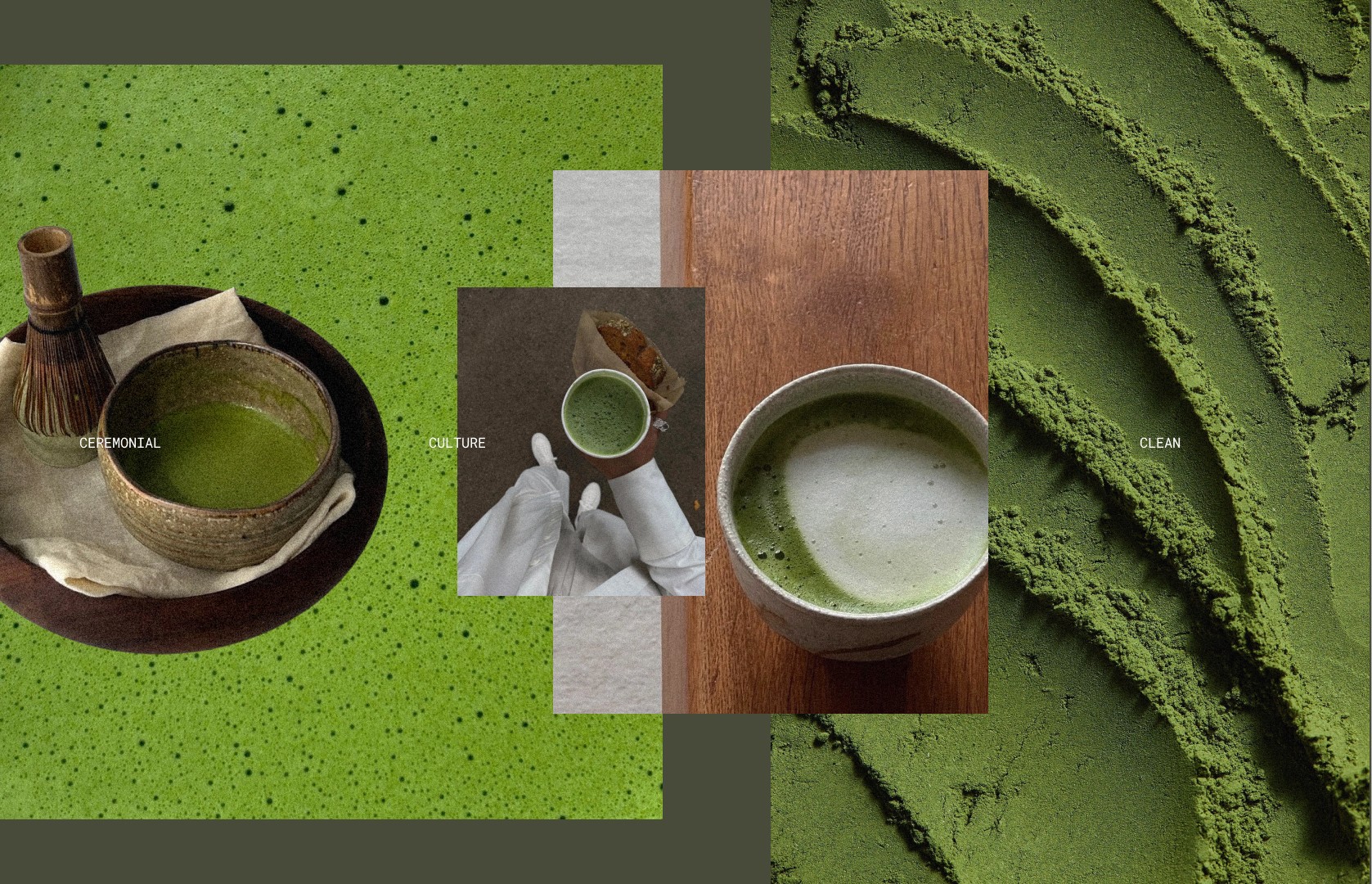
Here’s a useful comparison. Hojicha is a roasted Japanese tea with a similar nutritional profile to matcha, made from the same plant, with genuine health credentials of its own. Nobody calls themselves a hoji girlie. The difference isn’t the leaf, it’s the colour, matcha’s saturated, almost unnatural green photographs in a way brown simply doesn’t, and on platforms where the image is the entire pitch, that’s not a minor detail, it’s the whole reason one tea became a global identity, and the other stayed a footnote. Turmeric lattes and activated charcoal both tried the same playbook a few years earlier: a striking colour and a wellness claim, and both faded once the novelty wore off. Matcha didn’t fade, because colour alone was never the only thing it had going for it.
A commodity built to fit everywhere
Matcha’s other advantage is structural. It slots directly into a latte, a dessert, a skincare serum, a shampoo, a snack bar, without needing anyone to build new infrastructure or learn a new occasion to consume it. Coffee chains didn’t need to teach customers a new ritual; they just swapped the espresso shot for a green one and kept everything else the same. That single ingredient now spans five separate retail categories at once, which means five separate industries are independently motivated to keep the trend alive, each for its own commercial reasons.
The part that looks like quiet Luxury, but isn’t
It’s tempting to read the ceremonial grade premium as the same scarcity logic that’s made quiet luxury and restraint so valuable across this series, and there’s a real overlap, matcha auction prices spiking the same way a logo became something to hide rather than show. But the mechanism runs in the opposite direction. Quiet luxury works by being invisible, recognised only by people who already know what they’re looking at. Matcha works by being loudly, photographably visible, woven into the “clean girl” aesthetic of curated mornings and good skin, where the whole point is that everyone sees you drinking it. Gwyneth Paltrow, Kylie Jenner, Rihanna, and Brad Pitt have all been photographed with one in hand, and unlike a quiet luxury garment, nobody has to already know what they’re looking at to clock it. One status signal hides. The other performs. They both end up signalling the same thing underneath: taste, time, and money; they just take completely different routes to get there.
There’s also an irony sitting underneath the whole category. More than half of Japan’s tea production is now exported, and people who grew up treating matcha as an unremarkable, everyday drink are watching it get sold back to the rest of the world as a luxury status symbol. The grading system driving a lot of that premium pricing, ceremonial versus culinary, isn’t even formally regulated. It’s largely industry self-labelling, and Western buyers wanted the most prestigious-sounding version badly enough that suppliers were happy to provide one.
None of this is happening to matcha alone, either. It’s riding the same wave that’s pulled bubble tea, mochi, and Korean corn dogs into the mainstream, a broader appetite for Asian food culture that’s been building for years. And the question of whether any of this counts as taking something too far from its roots doesn’t have a clean answer. The head of Japan House London has pointed out that the matcha latte is actually a younger tradition that’s genuinely popular inside Japan too; some people there reserve the powder strictly for the tea ceremony, plenty of others are perfectly happy drinking it in ice cream or a dessert. The line between honouring a tradition and flattening it turns out to be blurrier than either side of that argument usually admits.
Worth saying plainly
This follows a pattern that’s happened before, almost exactly. Something gets discovered by a wellness-conscious demographic, earns a health halo, gets amplified by how well it photographs, gets put into everything by brands chasing the same wave, and eventually, the saturation gets so complete that the original meaning disappears entirely, into mocktail menus and skincare and nail polish chasing a word rather than a substance. Turmeric lattes went through exactly this cycle. So did activated charcoal. Matcha is currently at the stage where a banana bread latte from a chain that recently dropped the word coffee from its name counts as a wellness purchase, which is a long way from a quiet morning at a tea ceremony. Worth keeping some scale in mind too, coffee is still many times the size of the entire matcha market, by some estimates more than twenty times over, so none of this is actually a takeover, it just feels like one because of how fast it’s moving and how loudly it photographs. Even the people selling it are nervous about exactly that speed; one tea distributor’s own CEO has said outright that nobody can predict when the craze will taper off, which could leave farmers and vendors holding a sudden glut of product they can’t move.
What this actually teaches
Strip the tea out of it entirely, and what’s left is a genuinely useful formula for what makes a commodity marketable at this scale. It needs a real, if modest, functional benefit people can feel, not just believe in. It needs to look distinctive enough in a photo that it survives being seen rather than read about. It needs to be flexible enough to enter several categories without asking anyone to change their habits to use it. And it needs enough actual depth and history sitting underneath it that brands can keep telling a story about it long after the first wave of hype passes, which is exactly what turmeric and charcoal never had enough of.
The brands that win the next version of this won’t be the ones searching for the next matcha. They’ll be the ones who can spot a product carrying all four of those qualities at once, before the rest of the market notices, and who understand that every one of these moments eventually saturates and gets replaced, which means the real skill isn’t finding the wave, it’s knowing when to ride it and when it’s already cresting.